
Common land: what does it mean in the 21st century?
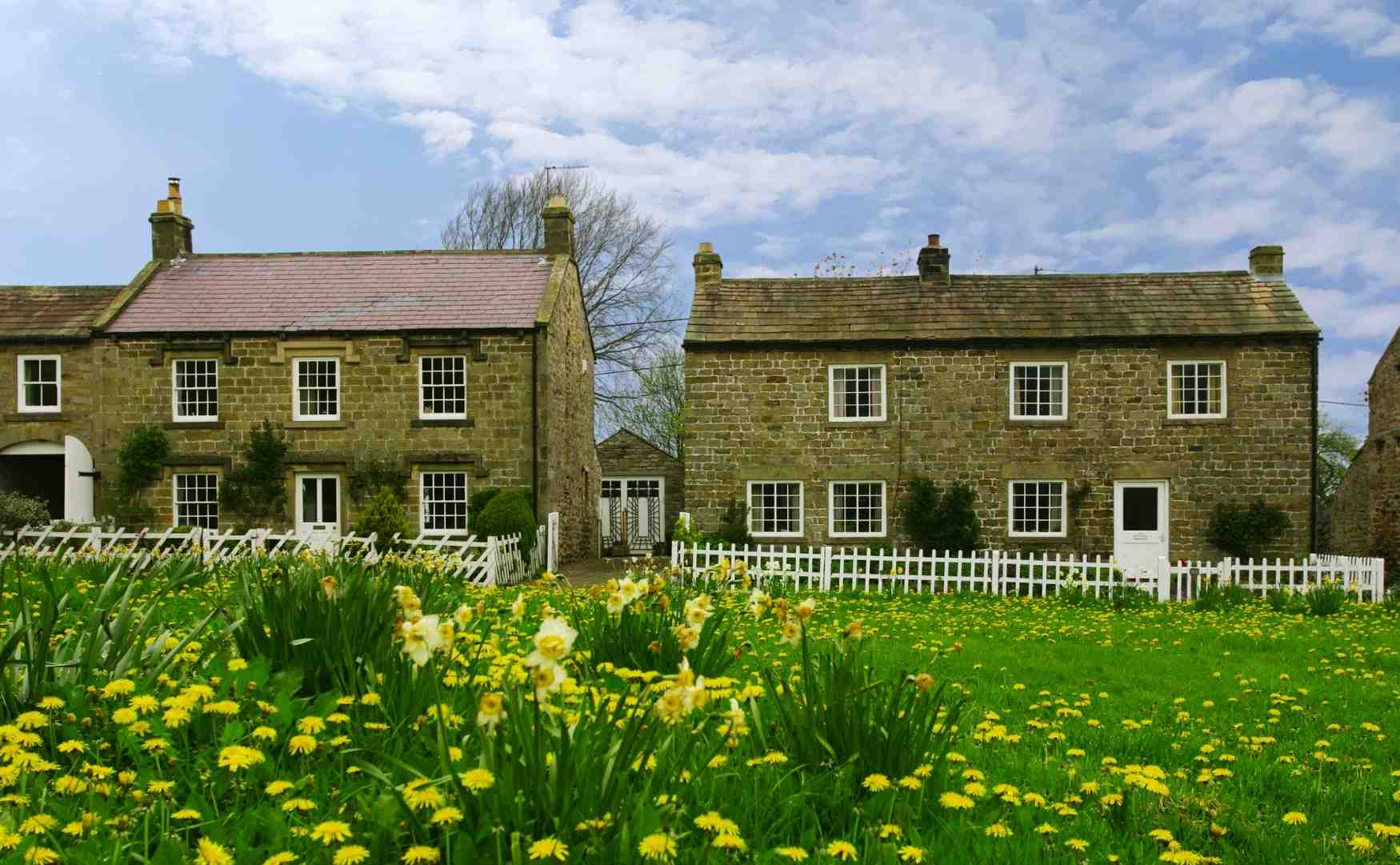
Common land is a historical, almost romantic notion that dates back centuries. But, what, legally is it?
Common land and its accompanying rights are a very ancient institution, and have their origins in the manorial system. They date back to before 1066, with the rights of commoners enshrined in Magna Carta in 1215, protecting the livelihoods of the landless rural poor.
Common land was once widespread, before being swept away by enclosure. In 1500, perhaps 50% of England and Wales was common land; estimates now have that proportion at just 3% or 572,000 hectares in England and Wales.
Who owns common land?
Common land is owned by someone or by some entity. For example, it might be owned by a local council, or privately owned by a local landowner.
Village greens are often considered to be common land, and in some rural Yorkshire villages, there are wide grassy verges, that also fall into this category.
What rights do the owners have?
The owners of common land enjoy largely the same rights as other landowners. Owners can use the land and take resources from it provided this does not interfere with someone’s ability to exercise their ‘rights of common’.
However the land is subject to:
- ‘rights of common’ held by other individuals
- special statutory controls that apply under commons legislation.
Rights of common
Rights of common originate from local customs and therefore reflect historical usage, e.g. the right to graze stock, to enable pigs to forage, to fish, to collect firewood, etc.
The rights are enjoyed by specific commoners, usually by virtue of the rights being attached to the property they occupy, which often adjoin the common.
Common land is still used for agriculture and to serve farming communities.
Special statutory controls
Common land is protected by a specialized statutory regime, primarily the Commons Act 2006 to ensure ‘rights of common’ and preserve public access to these spaces. Adding buildings, fences, or other structures, is restricted, as is the digging of ditches, or tarmaccing of land.
There is a public right of access to nearly all common land, either under the Countryside and Rights of Way Act 2000 or under earlier legislation. This means people can usually enjoy activities like walking and climbing on the land, and sometimes horse-riding, dog-walking, and sports and recreation.
People are not allowed to camp on common land, light a fire or barbecue, hold a festival or other event, or drive across it without permission from the owner.
As common land is often highly valued for their landscape, wildlife and archaeological interest, over half of common land in England has been designated as Sites of Special Scientific Interest (‘SSSIs’).
It is therefore difficult to change usage of common land or alter it significantly. Should an owner want to carry out ‘restricted works’ they need to apply to the Secretary of State.
How do I find out if a piece of land is common land?
Your local council will keep a ‘Register of Common Land and Village Greens’ for your area. Each entry in the register includes: a description of the land, who has rights of common, and what those rights are, and who owns it, or who owned it when it was first registered.
North Yorkshire: https://www.northyorks.gov.uk/environment-and-neighbourhoods/land-and-waterways/common-land-and-village-greens/common-land-and-village-green-registers
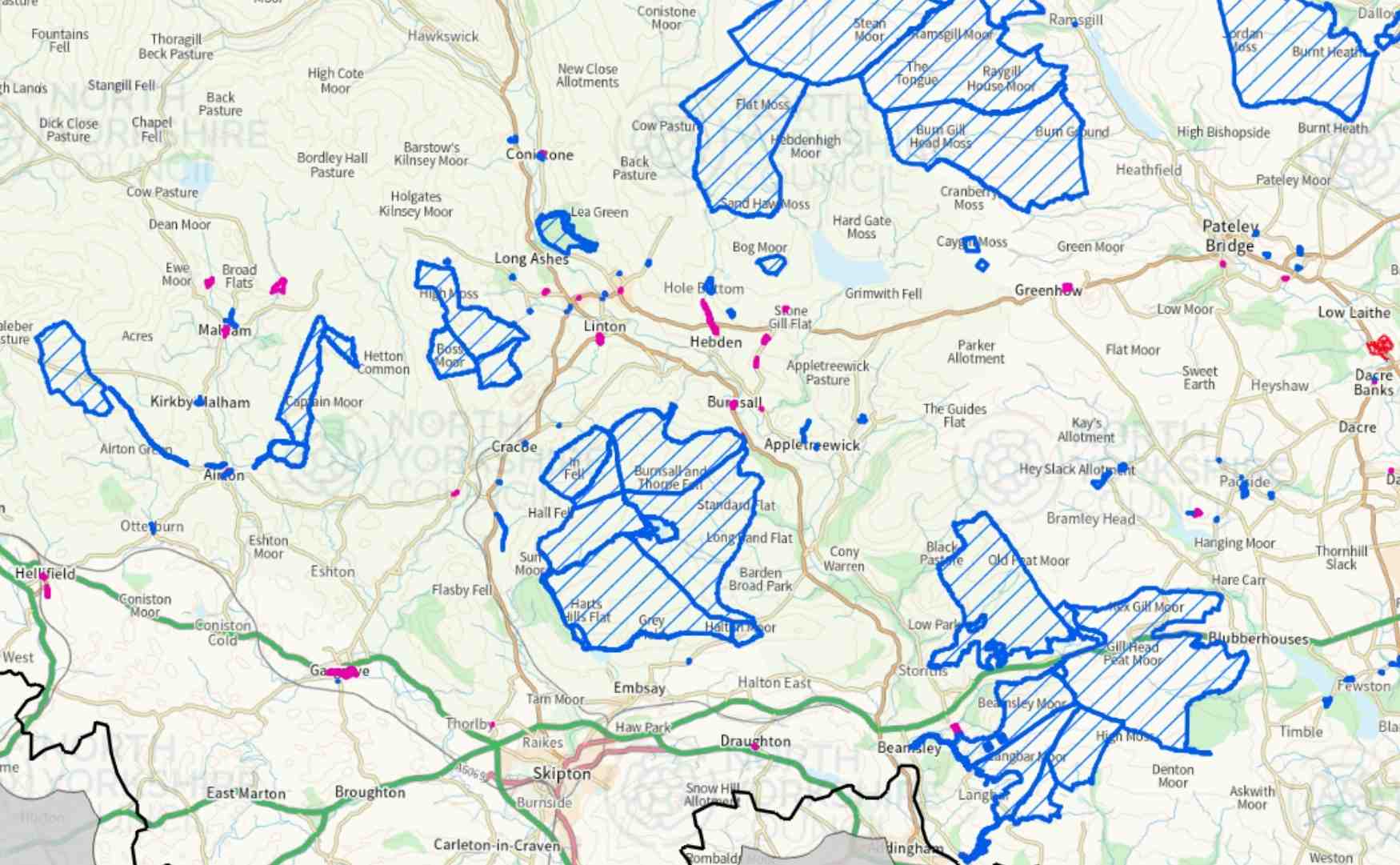
Image: Common land near Skipton, as shown on the North Yorkshire register
West Yorkshire: https://www.bradford.gov.uk/your-community/community-assets/statutory-register-of-common-land-and-village-greens/
For further information, contact Emily Hickling on 01756 692 861 or email emily.hickling@awbclaw.co.uk.

2nd April 2026
Further reading:
Adverse Possession: it’s more common than you think
APR and BPR – the new, new rules for 6th April 2026 for farmers
Proprietary estoppel: sounds complicated, but a relatively simple idea